Tineco Floor ONE Stretch S6 Review: Worth It? (October 2026)
The Tineco Floor ONE S6 Stretch suits homes with hard floors beneath low furniture and buyers who want heated roller cleaning and drying. Choose the i5 Stretch for hair-focused cleanup or the roborock F25 GT Gen 2 if carrying weight matters more.
On this page (9 sections)
- What does the Tineco Floor ONE Stretch S6 do well?
- Will the Stretch S6 fit beneath your furniture?
- Which floors and messes make an S6 worthwhile?
- How much cleaning can you plan around one charge?
- What does Flashdry handle, and what must you clean yourself?
- How does the Stretch S6 compare with the alternatives?
- How should you set up and use the S6?
- Which mistakes make a floor washer harder to live with?
- Should you buy the Tineco Floor ONE S6 Stretch?
The Tineco Floor ONE S6 Stretch is a good fit for hard floors beneath low furniture, especially when you want a roller-cleaning and drying cycle after use. Skip it if most of your cleaning involves carpet, carrying a machine between floors or quick dry pickups that don't justify washing a dirty-water tank.
The model reviewed here is the Floor ONE Stretch S6. We compared its features with 3 alternatives to help you choose around your furniture, floor type and daily messes.
What does the Tineco Floor ONE Stretch S6 do well?
The Stretch S6 combines vacuuming and wet mopping, with a reclining body that helps you reach areas a conventional upright floor washer may leave behind. Its strongest use case is a hard-floor room with accessible space beneath beds, sofas or cabinets.
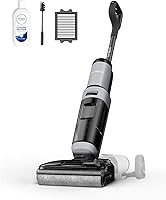
Tineco Floor ONE Stretch S6

- 180° lay-flat design
- Up to 40 minutes of runtime
- Dual-sided edge cleaning
- 158°F self-cleaning and drying
Choose the Stretch S6 for hard floors beneath beds and sofas, especially if you want heated roller cleaning and drying after each session. Plan space for its dock and time to empty and rinse the dirty-water tank.
Pros
- Reclines fully for under-furniture cleaning
- Cleans edges on both sides
- Longest advertised runtime among these models
- Heated self-cleaning followed by sealed drying
Cons
- Full charging takes 4.5 hours
- Dirty-water tank still needs manual care
- Furniture clearance needs checking before buying
The body reclines to 180°, and a three-chamber dirty-water separation system keeps collected water away from the motor in that position. Mini assistive wheels support forward and backward movement, while a 45° swivel helps you change direction.
That combination matters when a spill or dusty patch sits beyond the front edge of a sofa. You can approach the area with the cleaner lowered instead of moving the whole piece of furniture, provided the head and body have enough room.
Dual-sided edge cleaning also suits rooms with long baseboards or kitchen cabinets. You can work along either side of the head without planning every pass around a single cleaning edge.
Choose this design because you have reachable floor beneath furniture. A reclining body adds little value if your sofas sit directly on the floor or storage bins fill the space underneath.
Will the Stretch S6 fit beneath your furniture?
Measure the whole path beneath the furniture, including crossbars and supports, before buying the S6 for low spaces. Front-edge clearance alone won't tell you whether it can reach the dirt farther back.
Use 5.1 inches as a conservative planning height, then leave extra room for movement. A close match can become awkward where the floor rises slightly or the furniture has a lower support rail.
Check the approach as well as the gap. A nearby wall, coffee table or bed leg may prevent you from lowering the handle or turning the head into place.
Reachable depth matters too. If you must pull the machine straight back out after every pass, a wide open area beneath a bed may be easier to clean than a narrow space divided by several legs.
Plan storage at the same time. The drying and charging dock needs a suitable location near an outlet, with enough room to place and remove the cleaner without moving other household items.
For help deciding whether this type of machine fits your home at all, read our wet-dry vacuum mop guide.
Which floors and messes make an S6 worthwhile?
A floor washer makes the most sense for regular damp cleaning on approved hard floors, especially when crumbs and sticky marks occur together. It is less useful as your only cleaner in a home dominated by rugs and carpet.
Check both the machine instructions and your flooring maker's care rules before using water. An apparently sealed surface can still have worn areas, damaged seams or joints where moisture needs extra care.
Kitchen traffic lanes, tracked-in dirt and small food spills are practical reasons to choose a vacuum mop. The benefit is combining debris pickup and floor washing in one cleaning session.
Keep a dustpan or dry vacuum available for broken glass, sharp pieces and oversized debris. Don't treat a domestic floor washer as a tool for every material that lands on the floor.
For hardwood, our guide to whether wet-dry vacuums are good for hardwood floors explains the surface checks to make before wet cleaning.
How much cleaning can you plan around one charge?
Plan around up to 40 minutes of cordless use, with room for extra passes and interruptions. The S6 takes 4.5 hours to charge fully, so it suits a routine where it returns to its dock between cleaning sessions.
Tineco's iLoop system adjusts water use and battery power during operation. Don't translate the runtime into a fixed room count, since furniture, dirt levels and how slowly you work change the route.
The stated capacity is 0.8 L. Water refills and dirty-water disposal can interrupt cleaning even when battery power remains, so choose a sensible place to pause between rooms.
Clear shoes, cords and small furniture before starting. Spending battery time working around loose objects makes a cordless session less productive.
If you clean several floors, consider carrying as a separate task from steering. The S6 weighs 9.9 lb, and wheels that help it move across a floor don't help when lifting it onto a stair.
What does Flashdry handle, and what must you clean yourself?
Flashdry cleans the pipe and brush roller, then dries them, but the dirty-water tank still needs your attention. Both the cleaning and sealed drying stages use 158°F, and the roller turns in both directions during drying.
Those temperatures describe the machine's maintenance cycle. They aren't a reason to treat it as a steam mop or assume it sanitizes your floor.
The cycle suits buyers who want help rinsing the roller after use. It doesn't remove collected hair and food from the tank or replace checks for debris caught around removable parts.
Empty dirty water promptly, dispose of solids appropriately and rinse the tank as directed. Clean its lid and other accessible dirty-water contact areas according to the manual.
Follow the instructions for filter cleaning and drying before reassembly. Putting away damp removable parts or leaving dirty water inside can create odors despite the roller-drying feature.
The included replacement roller, cleaning tool and dry filter are useful items to keep together. Store spare parts where they can stay clean and dry rather than loose beside a wet dock.
How does the Stretch S6 compare with the alternatives?
Choose the S6 for under-furniture reach plus heated sealed drying, the i5 Stretch for hair-focused cleanup, the S5 for accessible open floors or the roborock for lower carrying weight. Their differences matter more than a single suction figure or maintenance temperature.
Tineco Floor ONE S6 and alternative features
| Model | Advertised runtime | Main reason to choose it | Main reason to skip it |
|---|---|---|---|
| Tineco Floor ONE Stretch S6 | Up to 40 minutes | Reclining reach with heated sealed drying | Long charging interval |
| Tineco Floor ONE i5 Stretch | Up to 30 minutes | Anti-tangle design for frequent hair cleanup | Shorter cordless sessions |
| Tineco Floor ONE S5 | Up to 35 minutes | Automatic adjustments on accessible floors | More weight to carry |
| roborock F25 GT Gen 2 | Up to 38 minutes | Lower weight with reclining reach | Still requires dirty-water cleanup |
Choose the i5 Stretch for frequent shed hair
The i5 Stretch directs hair off the roller toward the dirty-water tank through its anti-tangle design. It also provides dual-sided edge cleaning and a full reclining position, making it a practical alternative for hair beneath furniture.
Its 20 kPa suction is a stated specification, not a basis for ranking it above the S6, whose suction figure isn't provided here. Choose it for the hair-handling design rather than assuming the number proves better overall cleaning.
Skip the i5 if your normal route already pushes the limits of a cordless cleaning session. Tineco also calls for monthly filter and HEPA cleaning according to its instructions.
Choose the S5 for open rooms and automatic adjustments
The S5's iLoop sensor adjusts suction, water flow and roller speed. It suits buyers who want that automatic response while cleaning open kitchens, hallways and other accessible hard floors.
Its separate clean and dirty water tanks keep fresh solution apart from collected waste. A pet-hair strainer helps with disposal, while self-cleaning flushes the roller and tubing before centrifugal drying removes excess water.
Skip it when full lay-flat reach is central to your purchase. At 17.4 lb, it is also the least appealing option here for frequent lifting between floors.
Choose the roborock for regular lifting and tight turns
The F25 GT Gen 2 weighs 8.8 lb, the lowest specified weight in this comparison. Its 70° swivel steering, assistant wheels and reclining body also make it worth considering for furnished rooms.
A curved comb addresses hair tangles, and its maintenance system uses 194°F self-cleaning followed by hot-air drying. Choose around those features rather than assuming a hotter cycle guarantees cleaner floors.
Skip it if your main aim is to avoid post-cleaning chores entirely. Like the other machines here, it leaves you with collected dirty water to dispose of.
How should you set up and use the S6?
Assemble, charge and check the cleaner before adding it to your regular routine. Read the model's instructions for tank filling, approved solution, operating positions and the self-cleaning cycle.
- Secure the handle and removable parts. Check that the roller, filter and tanks are seated as directed.
- Choose the dock location. Keep access clear and follow the instructions for outlet placement and surrounding space.
- Fill to the marked limit. Use the specified water and solution amounts rather than estimating a stronger mix.
- Clear the cleaning route. Lift rugs out of the path and remove cords, sharp objects and large debris.
- Work in overlapping passes. Give the head time to collect water instead of rushing across the floor.
- Finish with machine care. Empty the tank and run the maintenance cycle in the order required by the manual.
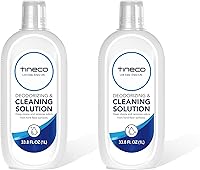
Use the correct solution from the start. Dish soap and improvised mixes can create excess foam, so follow the approved formula and dilution instructions.
Our guide to what cleaning solution works in a Tineco floor washer covers that choice in more detail.
Which mistakes make a floor washer harder to live with?
Leaving cleanup until later is the biggest routine mistake. A short floor-washing session still creates a tank of waste that needs attention before storage.
Avoid scrubbing one stubborn spot with repeated wet passes. Give the machine time to recover moisture, and use a floor-approved spot-cleaning method if the mark remains.
Don't assume a reclining cleaner fits every gap. Forcing it beneath a tight rail can limit steering and make removal difficult.
Treat edge cleaning as help along straight boundaries. Furniture legs and cramped corners may still need a cloth or another suitable tool.
Finally, choose around your actual chore. If most daily messes are a few dry crumbs, a small dry-cleaning tool may be quicker to put away than a machine that needs tank care.
Should you buy the Tineco Floor ONE S6 Stretch?
Buy the Tineco Floor ONE S6 Stretch for reachable hard floors beneath furniture when you'll use its reclining design regularly and accept the cleanup after each session. Its heated roller care is most useful when you make returning it to the dock part of the same chore.
Choose the i5 Stretch if shed hair drives your buying decision. Choose the S5 for open-floor cleaning with automatic adjustments, or the roborock if lifting the machine is a frequent concern.
Skip this category if your floors don't allow wet cleaning or carpet makes up most of your home. For a final check of the trade-offs before choosing, read our guide to cordless wet-dry floor cleaners.
Frequently asked questions
Can the Tineco Floor ONE Stretch S6 clean under furniture?
Yes, the Stretch S6 reclines fully to reach beneath furniture. Use 5.1 inches as a conservative starting point when measuring clearance, then allow extra space for steering and uneven floors.
Check the entire route beneath the furniture, since a low crossbar can block access beyond the front edge.
How long does the Tineco Floor ONE Stretch S6 run?
The Stretch S6 has an advertised runtime of up to 40 minutes and a full charge time of 4.5 hours. Plan a cleaning route that leaves time for furniture edges and stubborn spots.
Refilling water, emptying the tank and caring for the machine also add to the overall chore.
Does the Stretch S6 clean its own brush?
Yes, Flashdry cleans the pipe and brush roller, followed by sealed drying, with 158°F specified for both stages. You still need to empty and rinse the dirty-water tank, remove trapped debris and follow the manual for filter care.
Leave time for that cleanup after washing your floors.
Can you use the Tineco Floor ONE Stretch S6 on carpet?
Use the Stretch S6 only on surfaces approved in its instructions; a wet-dry design does not establish carpet suitability. Homes with rugs or carpet may still need a separate dry vacuum.
Read our guide to using a Tineco wet-dry vacuum on carpet before planning a mixed-floor cleaning routine.