Cordless Wet-Dry Floor Cleaners: The Complete Guide
A cordless wet dry vacuum collects debris and washes hard floors in one pass. Choose by floor type, messes, runtime, reach under furniture, and how much cleanup the machine needs after each use.
On this page (8 sections)
- What is a cordless wet dry vacuum?
- How do cordless wet dry vacuums work?
- When does a cordless wet dry vacuum make sense?
- Which features matter most when you choose one?
- How does a wet dry vacuum mop compare with a steam mop?
- How do you use a cordless wet dry vacuum?
- What should you check before buying a cordless wet dry vacuum?
- Which cordless wet dry vacuum should you choose?
A cordless wet dry vacuum collects debris and washes hard floors in one pass, using suction and a wet brush or roller. It can simplify everyday cleanup, but it still needs regular tank, filter, and brush care.
The right cleaner depends on your floors, the messes you face, and the spaces you need to reach. Compare its surface guidance, battery runtime, edge access, and post-cleaning routine before you buy.
What is a cordless wet dry vacuum?
A cordless wet dry vacuum is a floor cleaner that sucks up dry debris while washing a hard floor. It usually feeds clean water to a brush or roller, then collects the dirty water in a separate tank.
This differs from a stick vacuum paired with a spray mop. A wet-dry machine handles both steps in one pass, but its wet parts need cleaning after use.
Most are designed for compatible hard floors such as tile, vinyl, laminate, or sealed wood. Some can refresh area rugs, but that does not mean they deep clean carpet.
Check the cleaner's surface guidance and your flooring care instructions before using one on a floor or rug.
How do cordless wet dry vacuums work?
These cleaners apply cleaning liquid, scrub the floor, and recover dirty liquid as you move them. A squeegee or scraper near the roller can help guide water and debris toward the suction path.
The clean-water tank supplies the floor-cleaning liquid. The dirty-water tank collects recovered liquid and debris, so you need to empty it when full and after cleaning.
A powered roller helps lift grime, while suction picks up loose debris and liquid. Self-cleaning features can rinse parts of the machine, but they do not remove the need to empty tanks or follow the care instructions.
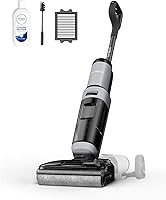
The Tineco Floor ONE i5 Stretch combines vacuuming and mopping with 20 kPa suction and up to 30 minutes of runtime. Tineco says its anti-tangle design directs hair into the dirty-water tank and advises monthly filter and HEPA cleaning.
When does a cordless wet dry vacuum make sense?
A cordless wet dry vacuum suits homes where hard-floor messes regularly combine crumbs, dust, spills, or tracked-in dirt. It can save a separate sweeping or vacuuming step before mopping.
It may be a good fit if:
- Your home has mostly compatible hard floors.
- You clean kitchen or entryway messes often.
- You want to wash and collect debris in one pass.
- You can empty the dirty-water tank and clean the machine after use.
It may be a poor fit if you mainly need carpet cleaning, want a tool for upholstery, or prefer a mop that needs little upkeep. Check whether the machine can reach under your furniture and whether its runtime matches the area you clean.
For a focused buying checklist, read our guide to choosing a wet-dry vacuum mop for hard floors. If you need options compared by features and use, see the best cordless wet-dry vacuums.
Which features matter most when you choose one?
The most useful cordless wet dry vacuum features depend on your floors, your cleaning route, and your willingness to maintain the machine. Start with compatibility and daily handling before comparing extras.
Which floors can a cordless wet dry vacuum clean?
Choose a machine that supports your floor material and finish. Sealed hardwood, tile, vinyl, and laminate can have different care needs, so check the floor maker's instructions as well as the cleaner's guidance.
Avoid assuming that a cleaner suitable for tile is also right for unsealed wood or delicate flooring. Follow the permitted cleaning method and do not leave water sitting on the floor.
For wood floors, see whether wet-dry vacuums are good for hardwood floors. That guide covers floor condition and moisture precautions.
How much runtime do you need?
Choose runtime based on the area you clean in one session, with some room for slower passes around furniture. Maximum runtime is a reference point; mode and cleaning conditions can affect how long a battery lasts.
The Tineco Floor ONE Stretch S6 offers up to 40 minutes of runtime. Its 180-degree lay-flat design reaches under furniture, while its Flashdry cycle uses 158°F water for self-cleaning followed by drying at 158°F.
If you clean a small kitchen or apartment, you may not need the longest runtime. For larger, open floor plans, consider charging time and whether your cleaning route can be completed before the battery needs a recharge.
How important are edge cleaning and low reach?
Edge cleaning matters if crumbs collect along baseboards or cabinets. A low profile can help reach beneath furniture, but compare the cleaner's laid-flat height with the actual clearance under your bed, sofa, or cabinets.
The Tineco Floor ONE i5 Stretch is 5.1 inches high when laid flat. The Tineco Floor ONE Stretch S6 also reclines to 180 degrees, though you should confirm its clearance before buying for a tight gap.
The roborock F25 GT Gen 2 supports hard floors including tile, vinyl, hardwood, laminate, and linoleum. It has a 38-minute battery life, a 194°F self-cleaning system, and hot-air drying.
What should you know about tanks and self-cleaning?
Tank capacity affects how often you stop to refill or empty the cleaner. Check which tank a capacity figure refers to before comparing models, since clean-water and dirty-water tanks serve different jobs.
Self-cleaning can rinse the roller and internal path, and some models add a drying cycle. These features can reduce manual scrubbing, but read the care instructions for filters, tanks, and any parts that need regular cleaning.
A heated self-cleaning cycle cleans parts of the machine. It does not by itself establish that the cleaner sanitizes your floors.
How much upkeep can you manage?
A wet-dry cleaner needs care after use because water and debris remain in its tanks and brush system. Plan to empty the dirty-water tank, rinse or run the self-clean cycle, and let washable parts dry as directed.
Hair handling also varies. An anti-tangle design or comb can reduce hair wrapped around the roller, but you may still need to remove hair and debris during routine care.
The Bissell CrossWave Edge Cordless Plus vacuums and mops hard floors, with right-side ZeroGap edge cleaning along walls and baseboards. Bissell says its Tangle-Free Technology reduces hair on the brush roll, while its self-cleaning mode flushes debris.
The Bissell CrossWave Edge Cordless Plus can transition from compatible hard floors to area rugs. Follow the surface instructions before using it on a rug.
How does a wet dry vacuum mop compare with a steam mop?
A wet-dry vacuum mop collects liquid and debris while washing, while a steam mop uses steam to clean a compatible floor. Choose based on the mess and the surface.
A wet-dry cleaner is useful for wet spills and loose debris in the same pass. A basic steam mop does not vacuum crumbs, and steam may be unsuitable for some sealed or sensitive floors.
Compare the two in our steam mop vs wet-dry vacuum mop guide. For steam cleaning on wood, first check whether you can steam mop hardwood floors.
How do you use a cordless wet dry vacuum?
Use a cordless wet dry vacuum by filling the clean-water tank as directed, moving the cleaner over the mess, then emptying and cleaning it. Follow the model manual for solution type, tank limits, and self-cleaning steps.
- Clear loose objects and check that the floor is compatible.
- Fill the clean-water tank with water and approved solution as directed.
- Turn on the cleaner and move it steadily over the floor.
- Use extra passes only where the floor needs them.
- Empty the dirty-water tank after cleaning.
- Run the self-cleaning cycle, if available, and clean filters or parts as directed.
- Let washable removable parts dry as directed before reassembly or storage.
Do not leave dirty water in the tank between cleaning sessions. For brand-specific steps, see our guides to using a Bissell CrossWave and using a Shark HydroVac.
What should you check before buying a cordless wet dry vacuum?
Check floor compatibility, runtime, dimensions, tank care, and solution requirements before buying. Those details determine whether the cleaner fits your home and how much work it adds after mopping.
Measure the clearance under furniture if low reach matters. Check the cleaner's laid-flat height, not only its upright height.
Consider where you will store and charge the machine. A cordless cleaner still needs a suitable charging spot, and some models use a dock that takes floor space.
If your floors include carpet, rugs, or delicate materials, confirm what the cleaner is designed to handle. A model that can refresh area rugs is not automatically a replacement for a carpet vacuum.
Which cordless wet dry vacuum should you choose?
Choose a cordless wet dry vacuum that matches your floor plan and cleanup routine. Consider the Tineco Floor ONE i5 Stretch for its 5.1-inch laid-flat height and dual-sided edge cleaning, or the Tineco Floor ONE Stretch S6 for up to 40 minutes of runtime and heated self-cleaning and drying.
Consider the roborock F25 GT Gen 2 for its 180-degree lie-flat reach and 70-degree swivel steering. Choose the Bissell CrossWave Edge Cordless Plus if area-rug refreshing and right-side edge cleaning fit your routine.
Compare the best cordless wet-dry vacuums if you want a shortlist, or see wet-dry vacuum mops for hardwood floors if wood is your main concern.
Frequently asked questions
What does a cordless wet dry vacuum do?
A cordless wet dry vacuum combines suction and a wet brush or roller to collect dry debris and wash hard floors in one pass. Most models also separate clean and dirty water, so you fill a clean-water tank and empty the dirty tank after cleaning.
Can a cordless wet dry vacuum replace a regular vacuum?
A cordless wet dry vacuum can handle loose debris and wet messes on compatible hard floors, but it may not replace a regular vacuum for carpets, upholstery, stairs or detailed dusting. Check the machine's surface guidance and keep another vacuum if your home has those needs.
Are wet dry vacuum mops safe for hardwood?
They can be suitable for sealed hardwood when the floor maker permits damp cleaning and you use the cleaner as directed. Avoid leaving standing water, clean up spills promptly, and check our guide to wet dry vacuum mops for hardwood floors before choosing.
How often should you clean a wet dry vacuum mop?
Empty and rinse the dirty-water tank after each use, and clean the brush and filter on the schedule in your model's instructions. A self-cleaning cycle can help flush debris, but you still need to empty the tank and maintain removable parts as directed.
Can you use any floor cleaner in a wet dry vacuum?
No, use only a cleaning solution approved for your model, since other cleaners may foam or leave residue. Follow the manual's dilution instructions, and see our guides to Bissell CrossWave cleaning solution and Tineco floor cleaning solution for help checking compatibility.