How to Choose a Wet-Dry Vacuum Mop
Choose a wet-dry vacuum mop by matching it to your sealed hard floors, messes and cleanup routine. Check how it handles edges, low furniture, hair, battery runtime and brush care before comparing models.
On this page (6 sections)
Choose a wet-dry vacuum mop by matching it to your sealed hard floors, the messes you clean, and the upkeep you'll handle. Check floor compatibility, edge reach, low-clearance access, battery runtime and brush care before settling on a model.
These cleaners vacuum debris and wash floors in one pass, so they can help with crumbs, hair and spills in busy rooms. For a broader overview of the category, see our wet-dry vacuum mop guide.
Which floors and messes do you need to clean?
Choose a cleaner that supports your floor type and suits the messes you handle most often. Hard-floor options can include tile, vinyl, laminate and sealed wood, but the care instructions for your own floor still matter.
Wet-dry vacuum mops pick up dry debris while washing the floor. That can be useful for everyday kitchen spills and tracked-in dirt, but it doesn't make every model suitable for every surface.
Check the floor maker's care guidance, especially for wood and laminate. Avoid leaving standing water, and use only a cleaning solution approved for both the machine and your flooring.
If hardwood is your main concern, compare the details in our guide to wet-dry vacuums for hardwood floors. For other surfaces, our floor-type cleaning guide helps you match the cleaning method to the material.
How do tank setup and brush care affect daily use?
Look for separate clean- and dirty-water tanks to keep fresh water apart from collected water as you clean. Then check how much water each tank holds and what steps the machine needs after a session.
A dual-tank setup keeps the clean-water supply separate from collected dirty water. Tank capacity affects how often you may need to refill or empty, but room layout and mess size also shape how far a fill goes.
Self-cleaning can reduce brush cleanup, but it isn't a substitute for maintenance. Check whether the brush, filter or tanks still need rinsing, drying or regular care.
Hair can wrap around a roller brush, so look for an anti-tangle feature if you clean up pet or long hair often. Our guide to cordless wet-dry floor cleaners covers more features to compare.
How much reach and runtime do you need?
Pick a cleaner that can reach your tight spots and cover your usual cleaning session. Look for a low-profile or lay-flat design for furniture clearance, and compare claimed runtime with the area you clean at once.
Edge-cleaning features can help pick up debris along baseboards. If you have narrow gaps or low furniture, measure the clearance before buying and compare it with the cleaner's dimensions or laid-flat height when available.
For cordless models, runtime is a guide rather than a guarantee for every use. Allow for differences in cleaning conditions when planning how much floor to cover on one charge.
| If your priority is… | Compare… |
|---|---|
| Reaching below furniture | Lay-flat angle and height when reclined |
| Cleaning close to baseboards | Brush design and whether it reaches one or both sides |
| Covering a larger area | Runtime, tank capacity and recharge time |
| Handling pet hair | Anti-tangle features and brush-cleaning steps |
If you're deciding between a wash-and-vacuum machine and steam, see our steam mop vs wet-dry vacuum mop comparison. The right choice depends on the type of mess and floor care your routine calls for.
Which wet-dry vacuum mop fits your routine?
Choose based on the feature you'll use most often, such as low-furniture access, runtime or brush cleanup. These 4 options illustrate different ways to weigh those trade-offs.
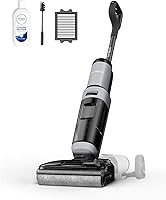
Tineco Floor ONE i5 Stretch for low furniture and edges
The Tineco Floor ONE i5 Stretch suits rooms where you need low-furniture access and dual-sided edge cleaning. It reclines 180 degrees and measures 5.1 in high when laid flat.
It has 20 kPa suction and an anti-tangle design, and Tineco claims up to 30 minutes of runtime. Its brush system sprays clean water while scraping dirt from the roller during cleaning.
Consider its filter upkeep before choosing it: Tineco instructs you to clean the filter and HEPA filter monthly. The cleaner is battery powered, so compare its runtime with the size of your typical session.
roborock F25 GT Gen 2 for longer stated runtime
The roborock F25 GT Gen 2 is an option for longer sessions, with a 38-minute battery life. Its 180-degree lie-flat design helps it reach under furniture where clearance allows.
It supports tile, vinyl, hardwood, laminate and linoleum. Its features also include 20,000 Pa suction, a dual-edge scraper and a self-cleaning system with high-temperature cleaning and hot-air drying.
It weighs 8.8 lb and has 70-degree swivel steering, so consider both carrying weight and movement around furniture. Charging takes 4 hours, so plan for charging time between sessions.
dreame G10 Pro for separate clean and dirty water
The dreame G10 Pro suits shoppers who want separate clean- and dirty-water tanks. The tanks keep the clean-water supply apart from the water collected during cleaning.
Dreame claims up to 35 minutes of runtime, and the cleaner has a one-press self-cleaning cycle. It vacuums dry debris and wet spills while mopping in one pass.
It weighs 11.2 lb. Compare that with your comfort level for moving and storing an upright cleaner, especially if your routine includes carrying it between floors.
Bissell CrossWave Edge Cordless Plus for area rugs
The Bissell CrossWave Edge Cordless Plus suits homes that need hard-floor cleaning and area-rug refreshing. It works on tile, sealed wood and laminate, and transitions between hard floors and area rugs.
Its ZeroGap Technology targets debris along the right side of the brush roll. Bissell says Tangle-Free Technology reduces hair on the roller, while the self-cleaning mode flushes debris from it.
It handles wet and dry messes together with cordless power. Confirm that the surfaces in your home match the care guidance for the machine and the floor.
What should you check before buying?
Check floor guidance, fit and care steps before choosing a wet-dry vacuum mop. These details can matter as much as suction or runtime once the machine is part of your routine.
- Floor compatibility: Confirm your floor type is supported, including any limits for wood or laminate.
- Clearance: Measure under furniture and compare it with the machine's dimensions or lay-flat height.
- Edges: Check which side of the brush reaches close to walls and baseboards.
- Tank capacity: Compare clean- and dirty-water capacity with the size of your usual cleaning area.
- Runtime and charging: For cordless models, check claimed runtime and charge time.
- Brush and filter care: Read how often parts need cleaning, rinsing or drying.
- Solution: Use a cleaning solution approved for the machine and your floor.
If you mainly need a machine for wood floors, our best wet-dry vacuum mops for hardwood floors guide narrows the options by that priority. For a broader appliance comparison, see best vacuum mop combos.
How do you choose the right wet-dry vacuum mop?
Choose a lay-flat wet-dry vacuum mop for low furniture, or prioritize runtime if you clean larger areas at once. If brush cleanup is your main concern, compare self-cleaning features and the manual care each machine still needs.
Before you buy, verify your floor's care needs, measure tight spaces and check the brush and filter instructions. Then compare the options in our wet-dry vacuum mop guide to narrow your shortlist.
Frequently asked questions
What should I look for in a wet-dry vacuum mop?
Start with floor compatibility, edge reach, tank setup and brush care. Then compare how the cleaner handles your usual dry debris and wet spills, fits under furniture, and covers your cleaning session on a charge, so its features match the way you clean.
Can a wet-dry vacuum mop be used on hardwood?
Some wet-dry vacuum mops support hardwood, but both the machine's instructions and your floor's care guidance should allow wet cleaning. Check the finish and use an approved solution without leaving standing water; our guide to wet-dry vacuums for hardwood floors explains what to consider.
Do wet-dry vacuum mops need cleaning after every use?
Plan to empty the dirty-water tank after cleaning and care for the brush and filter as the manual directs. A self-cleaning cycle can reduce brush cleanup, but check which parts still need rinsing or drying before you put the machine away for its next use.
Is a cordless wet-dry vacuum mop right for a large home?
A cordless wet-dry vacuum mop can work for a large home if its runtime and tank capacity suit the areas you clean in one session. Allow for refills and charging breaks, and compare the claimed runtime with your cleaning pace rather than assuming one charge will cover every room.