Can You Steam Mop Hardwood Floors?
Usually, you should not steam mop hardwood floors. Heat and moisture can damage wood or its finish, so use steam only if your flooring manufacturer approves it for your exact floor.
On this page (9 sections)
- Can you steam mop hardwood floors safely?
- Does a sealed finish make hardwood steam-safe?
- How should you clean hardwood when steam isn't approved?
- Which steam mop features matter after your floor is approved?
- Which of these steam mops suits your cleaning routine?
- How do you set up and care for an approved steam mop?
- Can you use steam or a floor washer on engineered hardwood?
- What should you do if you already steam mopped hardwood?
- Should you buy a steam mop for your hardwood floors?
Usually, you should not steam mop hardwood floors. Use steam only if your flooring manufacturer clearly approves it for your exact floor, because heat and moisture can damage wood or its finish.
“Suitable for sealed hardwood” on a mop describes the machine's intended surfaces. Your floor's care instructions decide whether that method belongs in your home.
Before buying a steam mop, confirm compatibility, then choose features that fit your rooms and cleaning routine. If steam isn't approved, a dry or lightly damp method is the better choice.
Can you steam mop hardwood floors safely?
You can steam mop hardwood floors only when both the floor and mop instructions permit it. If either set of instructions rules it out, don't use steam.
Steam puts heat and moisture against the floor. Water can reach wood through joints or worn finish, while heat may affect the surface coating.
Solid wood, engineered wood, and different finishes don't all respond the same way. A mop's low setting cannot make an unsuitable floor compatible.
Approval may also come with limits on equipment or use. Follow those limits rather than borrowing instructions from a different flooring brand or another room.
Does a sealed finish make hardwood steam-safe?
A sealed finish does not automatically make hardwood steam-safe. The surface coating does not turn the whole floor, including its seams and edges, into a waterproof surface.
Worn traffic paths, scratches, and repairs deserve extra attention. If the floor's condition has changed since installation, ask the flooring company whether its cleaning guidance still applies.
Don't rely on shine or a water-drop check to identify the finish. Those clues cannot establish whether the floor tolerates steam.
How do you check hardwood floors before steam mopping?
Find the exact flooring product and its care guide before choosing a machine. Installation records, leftover packaging, receipts, or renovation paperwork may help identify it.
Ask the flooring manufacturer these questions if the guide is unclear:
- Is steam cleaning allowed on this exact floor and finish?
- Are there restrictions on the machine, steam setting, or pad?
- Do repaired sections or worn areas change the advice?
- Does the warranty place limits on steam cleaning?
If you rent, ask the property manager for the approved care method. Don't use a hidden corner as a trial: a small area cannot confirm long-term compatibility.
How should you clean hardwood when steam isn't approved?
Remove grit first, then use the floor maker's approved cleaning method. For floors that allow damp cleaning, a well-wrung microfiber mop gives you control over how much moisture reaches the surface.
- Sweep with a soft broom or vacuum with a floor-approved attachment.
- Prepare the recommended wood-floor cleaner exactly as directed.
- Wring the mop until it feels barely damp and does not drip.
- Wipe a small section, changing or rinsing the pad as it becomes dirty.
- Dry any remaining surface moisture with a soft cloth.
Don't pour cleaner straight onto the boards or use extra concentrate to tackle a sticky patch. Apply the approved cleaner as directed and use gentle wiping rather than soaking the area.
For routine dust and crumbs, dry cleaning may be all you need. Our steam mop vs regular mop comparison explains the practical differences if you're deciding whether another machine would help.
Which steam mop features matter after your floor is approved?
Prioritize permitted steam control, easy pad changes, and manageable handling. A feature is useful only if you can use it within your floor's care instructions.
Adjustable output helps you follow any allowed steam setting. It doesn't measure the floor's moisture or prevent you from leaving the head in one spot.
Check outlet locations before choosing a corded model. A longer cord may reduce outlet changes, but you still need a clear route that keeps it away from the cleaning head.
A removable tank is helpful if lifting the whole mop to fill it would be awkward. Also consider how you'll wash and dry pads, since a dirty pad can spread grime across the next room.
If most of your home is hardwood that prohibits steam, buy for that floor first. A steam mop may still serve an approved tile area, but it won't replace your wood-floor cleaning tools.
Which of these steam mops suits your cleaning routine?
Choose among these models only after confirming floor compatibility. Their differences concern handling, controls, and spot cleaning, not permission to use steam on every hardwood floor.
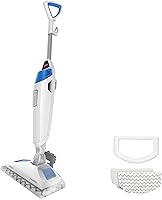
Bissell PowerFresh 1940A: for mixed cleaning needs
The Bissell PowerFresh 1940A suits buyers who want more choice over steam output and convenient sink refills. Its removable tank holds 16 fluid ounces, and its 23-foot cord helps when outlets are spaced apart.
The flip-down Easy Scrubber adds a way to work on dried messes. Reserve that tool for surfaces where both the brush and steam are permitted; don't assume a stubborn mark on wood needs stronger scrubbing.
Skip it if carrying weight is your main concern: it weighs 6.2 pounds, compared with the lighter Shark below. Its washable microfiber pads also need a regular cleaning and drying routine.
Bissell PowerFresh Deluxe 1806: for separate spot cleaning
The Bissell PowerFresh Deluxe 1806 suits homes where approved hard floors collect sticky spills and spot cleaning matters. Its detachable SpotBoost Brush provides a separate tool for those marks.
It warms up in 30 seconds, and the included measuring cup helps with filling. Choose it if you prefer filling with a cup over removing a tank and carrying it to the sink.
Skip it if you want the 1940A's extra steam setting or removable-tank convenience. Don't choose it just for the brush if your wood-floor instructions prohibit abrasive spot cleaning.
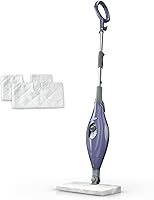
Shark Steam Mop S1000: for easier carrying
The Shark Steam Mop S1000 suits buyers who value lighter handling and simple storage. Swivel steering helps you work around furniture, while the removable tank allows refilling at the sink.
Its 2 machine-washable Dirt Grip pads let you change pads while cleaning. Keep a clean one available rather than pushing a heavily soiled pad through another room.
Skip it if an 18-foot cord won't reach your cleaning areas comfortably, or if you specifically want the named steam-level choices on the Bissell models. Compare other features in our best steam mop guide.
How do you set up and care for an approved steam mop?
Prepare the floor and fit a clean pad before starting. Follow the machine's filling instructions, including its recommended water type, and add no cleaner, vinegar, or other liquid unless expressly allowed.
Plan a route toward the exit so you won't need to step across freshly cleaned sections. Clear small obstacles and remove grit before bringing out the mop.
Use only the steam level your floor permits and keep the head moving as directed. Don't park an active mop on the wood while you move furniture or answer the door.
If a mark remains, stop and use the floor's approved spot-cleaning method. Repeated slow passes add heat and moisture without changing what the finish can tolerate.
After use, switch off and unplug the mop, then let it cool before handling the pad or tank. Follow its storage instructions, wash pads according to their care directions, and let them dry fully.
For the full cleaning sequence, read how to use a steam mop. Your floor's restrictions still apply at every step.
Can you use steam or a floor washer on engineered hardwood?
Engineered hardwood needs its own explicit approval for steam. Its layered construction does not make its wood surface, joints, or edges immune to moisture.
Check the exact floor's guide rather than applying advice for solid hardwood or another engineered product. A thick wear layer is not permission to steam clean.
A wet-dry floor washer uses a different cleaning method, but it also requires compatibility checks. Confirm the machine, solution, and amount of moisture are allowed before switching.
Our guide to wet-dry vacuum mops for hardwood floors explains that option. If neither machine type is approved, stay with the recommended manual method.
What should you do if you already steam mopped hardwood?
Stop using steam and dry visible moisture with a soft cloth. Check seams, board edges, and the finish for cloudy patches, discoloration, swelling, or raised areas.
If you notice a change or moisture remains between boards, contact the flooring manufacturer or a qualified floor professional. Keep a note of the machine, settings, and cleaning method to help explain what happened.
Don't apply polish or more steam to hide a cloudy patch. The correct repair depends on the finish and the source of the damage.
If the floor looks unchanged, check its care instructions before cleaning again. One uneventful use does not establish that repeated steam cleaning is suitable.
Should you buy a steam mop for your hardwood floors?
Buy only after your floor's care guide answers “can you steam mop hardwood floors?” with clear approval. If approval is absent, put your budget toward the recommended mop, pads, and cleaner.
Choose the PowerFresh 1940A for its steam-level choice and removable tank, the Deluxe 1806 for its separate spot brush, or the Shark S1000 for lighter carrying. Match those benefits to your actual routine.
Once compatibility is settled, compare the best steam mops for hardwood floors for more buying help. The right machine must fit both your cleaning needs and your floor's care limits.
Frequently asked questions
Can you use a steam mop on sealed hardwood floors?
Only if the flooring manufacturer approves steam cleaning for your exact floor. A sealed surface can still have seams, worn areas, or a finish that heat and moisture may affect.
Check the care guide first, and use its recommended cleaning method if steam approval is missing or unclear.
Does steam damage hardwood floors?
Steam can damage hardwood by affecting the finish or allowing moisture to reach the wood through seams and worn spots. Possible results include cloudy patches, swelling, or raised board edges.
Damage is not certain after every use, but an unchanged appearance does not prove that repeated steam cleaning is suitable.
What is the safest way to clean hardwood floors?
Follow your floor manufacturer's care instructions, starting with a soft broom or an approved vacuum attachment to remove grit. If damp cleaning is allowed, use a well-wrung microfiber mop and the recommended cleaner.
Work in small sections, avoid soaking the surface, and dry any remaining water promptly.
Can you steam mop engineered hardwood?
Use steam on engineered hardwood only when its manufacturer explicitly allows it. Engineered boards have wood layers, seams, and a surface finish that still need protection from excess moisture.
Check the instructions for the exact flooring product, and choose its approved dry or lightly damp method when steam is not allowed.