Do Steam Mops Really Work?
Yes, steam mops work for routine dirt and dried spills on sealed hard floors approved for steam. Sweep first, use clean pads, and choose another method for loose debris, excess liquid, or floors that don't allow steam.
On this page (9 sections)
- How do steam mops work?
- What can a steam mop clean, and where does it fall short?
- Which floors are safe for steam mops?
- Which steam mop suits your cleaning routine?
- How should you set up and use a steam mop?
- Which mistakes cause streaks or floor damage?
- How do you care for the mop and pads?
- When is a regular mop or wet-dry cleaner the better choice?
- Do steam mops work well enough to buy one?
Yes, steam mops work for routine dirt and dried spills on sealed hard floors approved for steam. Heat helps loosen soil, while the pad collects it as you move.
They're useful for a kitchen floor with dried splashes or tracked-in dirt after sweeping. They won't collect a pile of crumbs, extract a puddle, or make heat-sensitive flooring safe to steam.
The buying decision starts with your floor's care guide, then your usual messes. Extra scrubbing features matter only after those checks.
How do steam mops work?
A steam mop heats water and delivers steam through or near a cleaning pad. Heat and moisture loosen dirt, and the pad wipes it from the surface.
That pad has a limited capacity for soil. Once it's dirty, continuing across another room can spread residue instead of removing it.
Flat-pad models rely on your pushing motion, while rotating-pad models add powered scrubbing. A spot brush gives you a separate way to work on a small dried patch.
Do steam mops work without cleaning solution?
Steam mops can clean with water alone, which suits routine dirt when your flooring permits steam. Don't put floor cleaner, vinegar, fragrance, or other additives in the tank unless the mop's manual expressly allows them.
An approved fragrance accessory is different from a tank additive. Scent also isn't a measure of cleanliness, so skip fragrance if you prefer an unscented routine.
What can a steam mop clean, and where does it fall short?
A steam mop is useful for dried splashes, tracked-in soil, and routine surface dirt. It works best when the mess can be loosened with heat and wiped into a pad.
A stained finish, damaged grout, or a scratch needs a different response. Repeated steam passes won't repair surface damage and can expose the floor to unnecessary heat and moisture.
Remove large spills and loose food before steaming. For crumbs mixed with liquid, a machine that collects wet and dry debris may save a separate cleanup step.
Our guide to wet-dry vacuum mops explains that alternative. A steam mop doesn't draw dirty liquid into a separate recovery tank.
Sanitizing is also a separate task from visible cleaning. Follow the model's exact sanitizing directions, and don't assume that an ordinary pass meets the required conditions.
Which floors are safe for steam mops?
Use steam only when both the flooring maker and mop maker approve it. A mop's broad sealed-floor recommendation doesn't override the care instructions for your particular floor.
Check the finish, joints, edges, and repaired areas before starting. Worn coatings or open seams can let moisture reach material below the surface.
Tile may be a suitable choice, but its finish and grout still need approval. Wood, laminate, and vinyl deserve particular care because their construction and finishes vary.
For wood floors, read whether you can steam mop hardwood floors. If you can't confirm permission, choose the cleaning method your flooring maker recommends.
A hidden-area check can reveal an immediate change in appearance, but it doesn't replace written approval. Low steam and quick passes don't turn an unsuitable floor into a suitable one.
Which steam mop suits your cleaning routine?
Choose powered pads for broad scrubbing, a spot brush for isolated patches, or no-steam control for flexibility. Also consider how much weight you'll lift and whether refilling will interrupt your usual route.
All 3 models below use cleaning pads rather than vacuum pickup. They suit homes where removing loose debris before mopping already fits the routine.
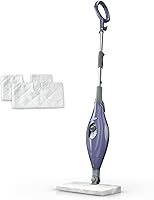
Shark Steam & Scrub S8201: for recurring stuck-on spots
The Shark suits buyers who want powered scrubbing plus extra steam for individual spots. It combines rotating pads with Light, Normal, and Deep modes and a fingertip-controlled Steam Blaster.
Its removable 11.83 fl oz tank makes refilling simpler, and 4 machine-washable pads are included. Spare pads help you switch to a clean set during a larger job.
At 8.9 lb, it's the heaviest of these 3 choices. Skip it if carrying the mop between floors matters more than powered scrubbing, or if your floor doesn't permit steam.
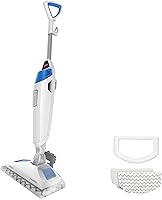
Bissell PowerFresh Deluxe 1806: for smaller spot-cleaning jobs
The PowerFresh Deluxe suits buyers who want a lighter mop with a brush for isolated sticky patches. It weighs 6.2 lb and heats in 30 seconds.
Its 0.56 L tank is filled with the included measuring cup. The optional fragrance disc sits in a dedicated tray, so there's no need to add scent to the water.
Choose it when occasional brush work makes more sense than powered pads across the whole room. Skip it if your main goal is automatic scrubbing over broad areas.
Bissell SpinWave SmartSteam 3897A: for flexible powered scrubbing
The SpinWave suits buyers who want rotating pads with a no-steam option. That setting gives you another cleaning mode, provided your floor allows the pads and moisture involved.
It weighs 7 lb, heats in 20 seconds, and has a removable water tank. The LED display shows cleaning mode and steam readiness, while swivel steering helps you work around furniture.
Choose it if you'll use powered scrubbing in both steam and no-steam modes. Skip it if you want a simple mop for occasional spills and won't use those controls.
For more choices, compare our best steam mops after confirming floor compatibility.
How should you set up and use a steam mop?
Start with a clean floor pad, a swept surface, and the correct water fill. Good preparation prevents grit from dragging under the pad and helps avoid streaks.
- Inspect the floor. Avoid damaged areas and confirm that steam is allowed.
- Clear loose dirt. Sweep or vacuum crumbs, hair, and grit, including along edges.
- Fit the pad while the mop is cool. Secure it as directed so it stays flat.
- Fill according to the manual. Use the recommended water type and stay below the fill limit.
- Wait for readiness. Select an approved setting before starting.
- Work toward the exit. Use overlapping passes without parking the hot head on the floor.
- Change a soiled pad. Stop and follow the cooling instructions before handling it.
For normal cleaning, begin with the lowest setting suitable for the task. Use any spot treatment or sanitizing routine only as directed and only where the floor permits it.
Keep people and pets away until the surface is dry. Our guide to how to use a steam mop covers the full routine.
Which mistakes cause streaks or floor damage?
The main mistakes are using a dirty pad, adding unapproved chemicals, and lingering over one spot. More steam isn't always the answer when a floor still looks dirty.
If streaks appear, stop and check the pad before increasing output. Old cleaner residue can also smear, so follow your floor's approved method for removing buildup.
Don't scrub harder with trapped grit under the head. Stop, let the equipment cool as directed, and remove the debris before continuing.
Avoid chasing a stubborn mark with repeated steam blasts. If it doesn't lift with normal use, identify the mark and choose a floor-safe treatment.
How do you care for the mop and pads?
Clean the pads after use and store everything dry. A damp, dirty pad leaves soil ready to transfer onto the floor during the next cleanup.
Unplug the mop and let it cool before removing pads or handling hot parts. Follow the manual for emptying the tank and storing the machine.
Wash reusable pads according to their care instructions. Avoid fabric softener unless permitted, since it can coat fibers and reduce absorption.
Follow the maker's maintenance directions for mineral buildup. Don't improvise with vinegar in the tank, and replace pads when wear prevents them from fitting or cleaning properly.
When is a regular mop or wet-dry cleaner the better choice?
Choose a regular mop for floor-approved cleaning solution and a wet-dry cleaner when collecting debris and liquid is the main job. Choose steam when compatible floors mainly need a water-only wipe.
Our comparison of a steam mop and a regular mop explains the difference in water control and cleaning methods. A regular mop is also the straightforward choice when your flooring prohibits steam.
Compare a steam mop with a wet-dry vacuum mop if food spills and crumbs often arrive together. For other selection details, see how to choose a steam mop for hard floors.
Do steam mops work well enough to buy one?
Buy one when your floors allow steam and dried surface dirt is a regular chore. Skip it when floor restrictions or frequent debris pickup would leave it sitting unused.
Choose the Shark for recurring stubborn spots, the PowerFresh Deluxe for lighter carrying and local brush work, or the SpinWave for powered pads with a no-steam option.
Before ordering, decide where you'll store the mop and how you'll wash and dry its pads. Then use our guide to whether a steam mop is worth it to check whether it earns a place in your routine.
Frequently asked questions
Do steam mops really clean floors?
Yes, steam mops loosen dirt with heat and moisture, then collect it on a cleaning pad. They work best on approved sealed floors after loose debris has been removed.
Change dirty pads during the job, since a loaded pad can spread soil instead of lifting more of it.
Is a steam mop better than a regular mop?
A steam mop suits water-only cleaning on floors approved for steam, especially when dried spills need loosening. A regular mop is the better choice when your floor requires a specific cleaner or prohibits steam.
Neither replaces removing grit first, and both need clean pads or mop heads.
Do steam mops sanitize floors?
Some steam mops can sanitize compatible floors when you follow their exact directions. The claim depends on conditions such as the surface, steam setting, and contact time.
A quick cleaning pass does not automatically meet those conditions, and you should never extend steam exposure beyond what your floor allows.
Can you use a steam mop on hardwood?
Use steam on hardwood only when the flooring maker permits it and the finish is intact. Sealed wood is not automatically suitable, because moisture can enter gaps and heat can affect finishes.
Read our guide to steam mopping hardwood floors before choosing this method.