How to Choose a Steam Mop for Hard Floors
Choose a steam mop by confirming your floor maker allows steam, then match the cleaning head, controls and reach to your rooms. Choose rotating pads for frequent scrubbing, targeted steam for isolated spots or a basic model for routine cleaning.
On this page (10 sections)
- How do you choose a steam mop for hard floors?
- Which floors can you steam mop?
- Which cleaning head suits your usual messes?
- Which of these steam mops fits your home?
- How much tank capacity and cord reach do you need?
- How much do weight and steering affect daily use?
- How should you set up and use a steam mop?
- How do you care for pads and prevent common mistakes?
- When is a steam mop the wrong choice?
- Which steam mop should you choose?
Choose a steam mop by confirming your floor allows steam, then matching the cleaning head, controls and reach to your rooms. Scrubbing features suit recurring dried-on dirt, while a basic mop can cover routine cleaning on approved floors.
Start with the job you need done: refreshing a small kitchen, tackling isolated food spots or cleaning several rooms. That choice matters more than collecting features you will rarely use.
How do you choose a steam mop for hard floors?
Choose in this order: floor approval, cleaning head, handling, then convenience features. This keeps you from choosing a capable machine that is awkward for your rooms or unsuitable for your floor.
Use these 5 questions to narrow the options:
- Is steam allowed? Check the care guide for your exact floor, then the mop's surface instructions.
- What dirt remains after sweeping? Routine film, isolated dried spills and frequent stuck-on patches call for different tools.
- How will you move it? Consider stairs, furniture, thresholds and the trip from storage to the sink.
- Can it reach the whole area? Map outlets and doorways before choosing a cord length.
- Will pad care fit your routine? Plan for washing, drying and changing pads during larger jobs.
The best steam mops guide compares options across these needs. If you are unsure what steam can remove, read do steam mops really work? before choosing a model.
A steam mop makes most sense when you already remove loose dirt and want a separate tool for the soil left behind. It will not eliminate every other floor-cleaning task.
Which floors can you steam mop?
Steam clean only surfaces approved by both the floor manufacturer and the mop manufacturer. “Sealed hard floor” describes a broad group, not permission to steam every floor within it.
Find the care instructions for your flooring brand and construction. Hardwood, laminate and vinyl can have restrictions that differ from the broad surface names printed on a mop.
Inspect the floor, too. Open seams, damaged edges, cracks or worn finish are reasons to stop and ask the flooring manufacturer about the right cleaning method.
Our guide to whether you can steam mop hardwood floors explains the wood-floor decision. For laminate-specific comparisons, use the steam mops for laminate floors guide after confirming that steam is allowed.
Tile also needs a closer look when it has a coating, damaged grout or adjoining materials with different care needs. Approval for the tile does not automatically cover every part of the room.
A hidden-area check can reveal an immediate change in appearance, but it cannot establish long-term compatibility. Floor approval comes first, even when a small patch looks fine afterward.
If you cannot identify the floor or find its care instructions, use the cleaning method you can confirm is suitable. Buying a gentler steam setting does not resolve that uncertainty.
Which cleaning head suits your usual messes?
Choose ordinary pads for routine soil, a spot tool for isolated spills or rotating pads for frequent scrubbing. More steam is not the only way these mops address dirt.
A flat microfiber pad collects loosened soil as you move it over the floor. That makes pad cleanliness part of the cleaning process, rather than a chore saved only for afterward.
Rotating pads add powered movement at the cleaning head. They suit buyers whose main reason for upgrading is repeated back-and-forth scrubbing across dirty patches.
A flip-down brush concentrates attention on a small area. A targeted steam burst serves a different role: it directs extra steam toward a stubborn spot without using that output across the whole room.
Adjustable steam is useful when your approved cleaning instructions permit different output levels. Start with the recommended setting for the surface and increase it only as the manual allows.
For light weekly cleaning, a simple head may be enough. For a kitchen where food often dries onto the floor, choose the type of spot treatment you would actually use.
Which of these steam mops fits your home?
Choose the Shark S8001 for powered scrubbing, the Bissell 1940A for a built-in brush, the Shark S2001 for targeted steam or the Shark S1000 for basic cleaning. Each addresses a different reason for buying a steam mop.
Shark Steam & Scrub S8001: for recurring stuck-on patches
The S8001 suits buyers who want powered pad movement for recurring stuck-on dirt. Its rotating head delivers over 150 scrubs per minute, and its Light, Normal and Deep modes let you choose steam output for the task.
LED headlights help reveal debris, while swivel steering helps you work around furniture. The included 4 washable Dirt Grip pads provide replacements when a working pair needs washing.
Choose this model when scrubbing is the feature you would use regularly. It is a less compelling choice for a small room that mostly needs a light refresh after sweeping.
Skip it if carrying weight is your main concern. Its powered cleaning head does not remove the need to lift the machine between floors or into storage.
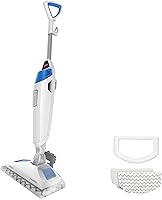
Bissell PowerFresh 1940A: for brush work and longer reach
The PowerFresh suits buyers who want a flip-down Easy Scrubber for dried-on messes and grout buildup. Its 3 steam settings support changes in output without making powered rotating pads the focus.
This is a useful combination for a kitchen or tiled room where most cleaning is routine, with a few spots that need brush attention. Its longer cord also makes it worth considering when outlet placement is inconvenient.
The model supports Spring Breeze scent discs, but fragrance is optional to the buying decision. Follow the accessory directions rather than adding scent products to the water.
Skip the PowerFresh if your priority is the lightest machine here or if you specifically want rotating pads. A built-in brush suits focused work; it serves a different need from powered scrubbing across larger patches.
Shark SteamSpot S2001: for isolated stubborn spots
The SteamSpot suits buyers who want extra steam aimed at individual messes. Its finger-controlled Steam Blaster lets you direct a burst toward a spot instead of increasing output throughout the room.
It includes a washable Dirt Grip pad for everyday dirt and a washable scrub pad for stuck-on messes. Light, Normal and Deep modes give you separate choices for general cleaning.
Choose it when your routine involves ordinary floor cleaning interrupted by a few stubborn patches. The 2 pad types also suit buyers who want to switch the pad texture to match the job.
Skip it if powered pad movement is the feature you want most. Also check your floor instructions before making targeted steam a priority, since extra attention in one place must still stay within the approved method.
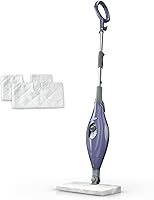
Shark Steam Mop S1000: for a straightforward routine
The S1000 suits buyers who want basic steam cleaning with few extras. Its removable tank, swivel steering and 2 washable Dirt Grip pads cover the core tasks of filling, moving and collecting loosened dirt.
It is the lightest option in this group, which matters if the mop travels between rooms or floors. Choose it for routine cleaning when you do not need a dedicated brush, targeted steam burst or rotating pads.
Skip it if recurring dried-on messes are the main reason you are replacing your current mop. One of the other cleaning-head designs gives you a specific tool for that problem.
Its simpler design still requires clean pads and floor preparation. Treat it as a steam-cleaning tool within your routine, rather than a shortcut around sweeping.
How much tank capacity and cord reach do you need?
Choose cord reach for your layout and tank size for your cleaning session. An easy route through the room can matter more than a small difference in water capacity.
| Model | Removable tank capacity | Cord length |
|---|---|---|
| Shark Steam & Scrub S8001 | 11.83 fl oz | Confirm before buying |
| Bissell PowerFresh 1940A | 16 fl oz | 23 ft |
| Shark SteamSpot S2001 | 500 ml, about 16.9 fl oz | Confirm before buying |
| Shark Steam Mop S1000 | 12.68 fl oz | 18 ft |
Measure from a usable outlet along the route the cord would follow, including furniture and corners. Leave room for comfortable movement without pulling the cord tight or running it across a busy doorway.
For a small kitchen, a refill may be an easy pause. Across several rooms, repeated trips to the sink become more noticeable.
Do not convert tank capacity into an assumed runtime. Steam setting, spot work and cleaning pace all change how quickly water is used.
All 4 tanks are removable, which helps with filling at the sink. Before choosing, consider whether your sink and faucet leave enough space to handle a tank comfortably.
How much do weight and steering affect daily use?
Weight matters most when you carry the mop, change levels or lift it into storage. Steering matters while cleaning around chair legs, cabinets and other obstacles.
| Model | Weight |
|---|---|
| Shark Steam & Scrub S8001 | 6.9 lb |
| Bissell PowerFresh 1940A | 6.2 lb |
| Shark SteamSpot S2001 | 4.8 lb |
| Shark Steam Mop S1000 | 4.6 lb |
Water adds to the weight you handle, so consider the filled machine as well as the figures above. Choose around the lifting task you find hardest, rather than assuming floor movement tells the whole story.
Map a path through your busiest room. If you must lift over thresholds or carry upstairs, a lighter model has a practical advantage every time you clean.
Check storage dimensions against the space available. Leave room for the head and cord, and arrange somewhere for washed pads to dry fully.
For tight furniture layouts, avoid assuming that a slim body guarantees access everywhere. The cleaning head also needs enough space to enter, turn and come back out.
How should you set up and use a steam mop?
Set up with a clean pad, the recommended water and a floor cleared of loose debris. Prepare the room before heating the mop so you can begin cleaning without leaving it standing on the floor.
- Sweep or vacuum first. Remove grit, crumbs and hair that could clog the pad or drag across the surface.
- Attach the correct pad. Follow the manual, and check that it sits securely and evenly.
- Fill while unplugged, as directed. Use the specified water type and stay below the fill limit.
- Choose the approved setting. Match the instructions for the mop and your floor.
- Work toward the exit. Keep the cord behind your route and avoid stepping across freshly cleaned areas.
Heat-up time is a convenience feature for short jobs. The SteamSpot is ready in 25 seconds, while the PowerFresh and S1000 take 30 seconds.
Once cleaning starts, keep the head moving as directed. For stubborn soil, use the model's intended scrub or spot feature rather than parking the hot head in place.
Change a pad when it becomes dirty or stops collecting soil well. A saturated, dirty pad can leave streaks even when the machine is producing steam.
See how to use a steam mop for the full routine. If sanitizing is your goal, follow the model's exact directions; a normal cleaning pass should not be assumed to sanitize.
How do you care for pads and prevent common mistakes?
Care starts with removing the cooled pad and washing it promptly. Leaving a damp, dirty pad attached makes the next cleaning session harder and keeps moisture against the head.
Let the machine cool according to the manual before handling the pad or tank. Wash pads with the recommended method, dry them fully and store them separately from dirty laundry.
Check pad condition as well as cleanliness. Replace pads that no longer attach properly or have become too worn to collect soil effectively.
Avoid these common mistakes:
- Adding homemade mixtures. Vinegar, oils and floor cleaner do not belong in the tank unless expressly permitted.
- Using maximum steam by default. Follow the surface directions instead of treating higher output as the standard.
- Steaming loose grit. Sweep first so the pad can focus on the soil left behind.
- Using one dirty pad everywhere. Keep clean replacements ready for larger jobs.
- Scrubbing damaged flooring. Stop if you find loose edges, exposed material or failing finish.
- Forcing a blocked machine. Unplug it and follow the troubleshooting instructions before inspecting or cleaning any outlet.
Follow the manual for water storage and mineral care. Do not improvise a descaling method or push objects into steam openings, since maintenance methods differ by machine.
When is a steam mop the wrong choice?
Choose another tool when steam is prohibited or your main job is collecting wet spills and loose debris. These mops are built around steam and pads, so plan separate pickup before cleaning.
For spilled drinks, large amounts of crumbs or frequent food debris, compare a wet-dry vacuum mop with your current routine. The steam mop vs wet-dry vacuum mop guide explains how the jobs differ.
A regular mop may be a better fit if your floor needs an approved cleaner applied with controlled moisture. Our steam mop vs regular mop comparison helps you decide whether adding a machine solves a real problem.
Also consider the work after cleaning. If washing and drying pads would keep you from using the machine, that maintenance burden belongs in the buying decision.
A steam mop is most useful when its specific cleaning method fits both your floor and your habits. Features cannot compensate for a mismatch on either point.
Which steam mop should you choose?
Choose the cleaning feature you need most, then check reach, lifting weight and pad care before ordering. That gives you a clear reason for the model you select.
- Choose the Shark S8001 for powered scrubbing across recurring stuck-on patches.
- Choose the Bissell 1940A for a flip-down brush and the longer confirmed cord in this group.
- Choose the Shark S2001 for isolated spots that benefit from targeted steam.
- Choose the Shark S1000 for a light, straightforward routine without added spot tools.
If you are still choosing by surface, compare our steam mops for hardwood floors and steam mops for tile floors guides. Buy only after you can confirm that your exact floor allows steam.
Frequently asked questions
How do I choose a steam mop for hard floors?
Choose a steam mop by checking floor approval first, then matching its cleaning head and controls to your usual dirt. Compare cord reach, filled weight and pad care next.
Choose scrub features for recurring dried-on spots, or a simpler model when routine cleaning is your main job.
Are steam mops safe for hardwood floors?
Use a steam mop on hardwood only when the floor manufacturer allows it and the mop instructions cover that surface. A sealed finish alone is not enough.
Check the care guide for your exact flooring, including any limits tied to its finish, seams or condition, before applying steam.
Is a larger water tank better on a steam mop?
A larger tank is useful when refill stops interrupt cleaning across several rooms, but it also adds water weight. Capacity does not establish runtime because steam output and cleaning pace vary.
For a small room, easy filling and comfortable handling can matter more than choosing the largest tank.
Do steam mops need cleaning solution?
These steam mops use water for steam cleaning, so do not add floor cleaner, vinegar, oils or disinfectant unless the manual expressly allows it. Follow the model's water guidance and filling limit.
An approved scent accessory has its own placement instructions and does not authorize adding fragrance to the tank.
What should I look for in a steam mop pad?
Choose a washable pad suited to your usual dirt and approved for the surface you clean. Routine soil calls for an absorbent pad, while recurring dried-on spots may justify a scrub option.
Check replacement-pad availability before buying, and keep enough clean pads to change them when they become dirty.